Service details
Trentinian services in detail
Each service describes the situation it addresses, the engineering approach applied and the outcome it is intended to produce.
SERVICE 01
New custom business applications
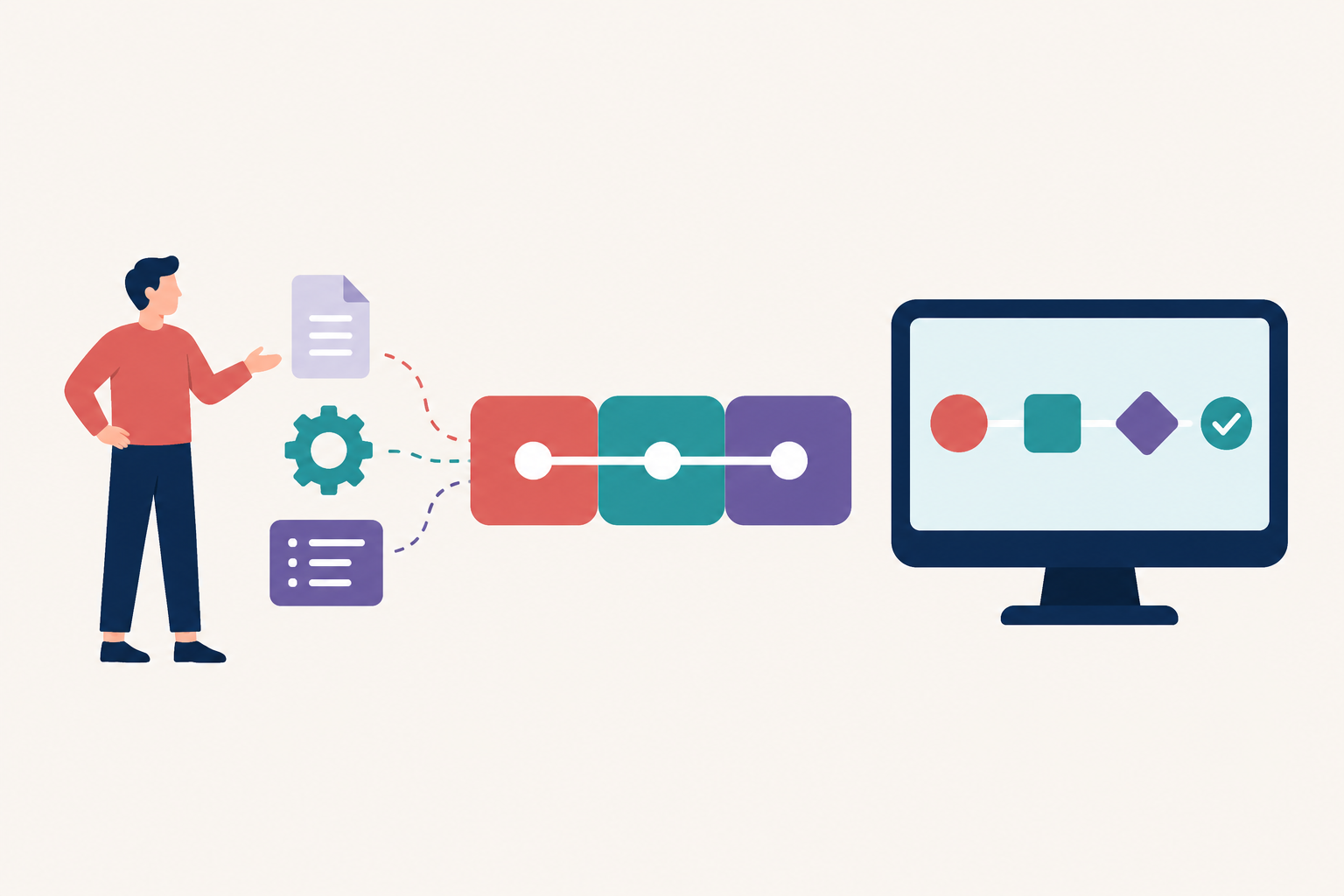
- Situation
Your business has outgrown off-the-shelf software
Standard products no longer fit the way your organisation actually operates.
A prototype needs to become a real application
A promising proof of concept must become secure, maintainable and ready for production.
A critical process has no suitable software
The business need is clear, but existing products are too limited, too complex or poorly matched.
- Approach
- 01
Understand the business problem
Trentinian begins by understanding the business problem, users, workflows, constraints and expected value.
- 02
Define the solution
AI-assisted discovery and design can accelerate solution exploration, requirements analysis and technical decision-making. Where the application depends on structured business data, Trentinian also designs the underlying data model, persistence approach and database architecture required to support it reliably.
- 03
Deliver incrementally
The application is then delivered incrementally, with AI-assisted development used to reduce engineering effort across implementation, refactoring, testing, documentation and technical analysis.
- 01
- Outcome
A purpose-built business application designed around the actual need, delivered with professional architecture, security, testing and production readiness.
AI-native engineering can make custom software viable for business problems that previously could not justify a conventional development project.
SERVICE 02
Backlog Cleanup & Rationalisation
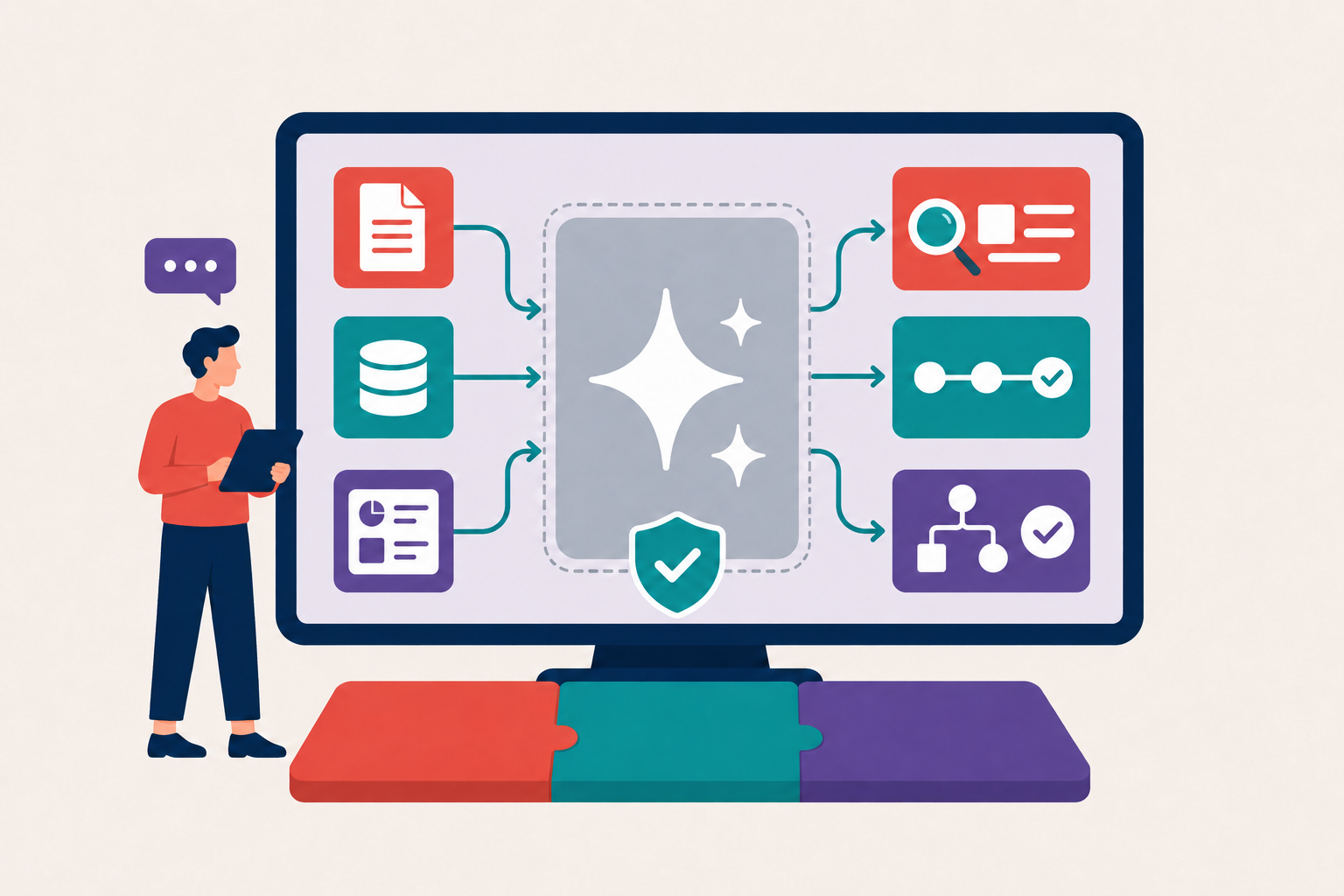
- Situation
Your backlog has grown beyond anyone’s control
Years of accumulated tickets make it difficult to distinguish genuine priorities from obsolete requests.
Bug reports cannot be reliably investigated
Tickets lack reproduction steps, context, screenshots, attachments or enough information to act on them.
The same problems appear across multiple tickets
Duplicate, related and contradictory items obscure the underlying issues and distort prioritisation.
- Approach
- 01
01 — Analyse the backlog
We review the complete backlog to understand its size, age, structure and quality. Automated analysis helps identify duplicates, related tickets, stale items, incomplete bug reports and other recurring problems.
- 02
02 — Triage every ticket
Each ticket is evaluated to determine whether it should be retained, clarified, merged, investigated, deferred or closed. Related tickets are grouped and obvious duplicates or obsolete items are identified.
- 03
03 — Recover missing context
Where important information is missing, we investigate the available history and work with ticket authors, developers and other stakeholders to establish what was originally requested, why it matters and whether it is still relevant.
- 04
04 — Standardise and complete
Tickets that remain in the backlog are rewritten into a consistent structure. Descriptions, reproduction steps, expected behaviour, supporting evidence, acceptance criteria and other relevant information are added or clarified where possible.
- 05
05 — Rationalise and prioritise
The cleaned backlog is reviewed with the relevant stakeholders. Outstanding decisions are resolved and remaining work is organised according to business value, urgency, risk, dependencies and implementation considerations.
- 06
06 — Establish ongoing backlog hygiene
We identify the practices that allowed the backlog to deteriorate and define practical conventions for ticket creation, refinement, ageing and review so that the problem does not immediately return.
- 01
- Outcome
A backlog that can once again be trusted.
Obsolete and duplicate tickets have been removed or identified for closure. Remaining tickets are understandable, consistently structured and supported by enough information to make informed decisions.
The organisation gains a clear view of what work remains, why it matters and what should happen next—providing a reliable basis for sprint planning, roadmapping and future development.
SERVICE 03
Existing application stabilisation and modernisation
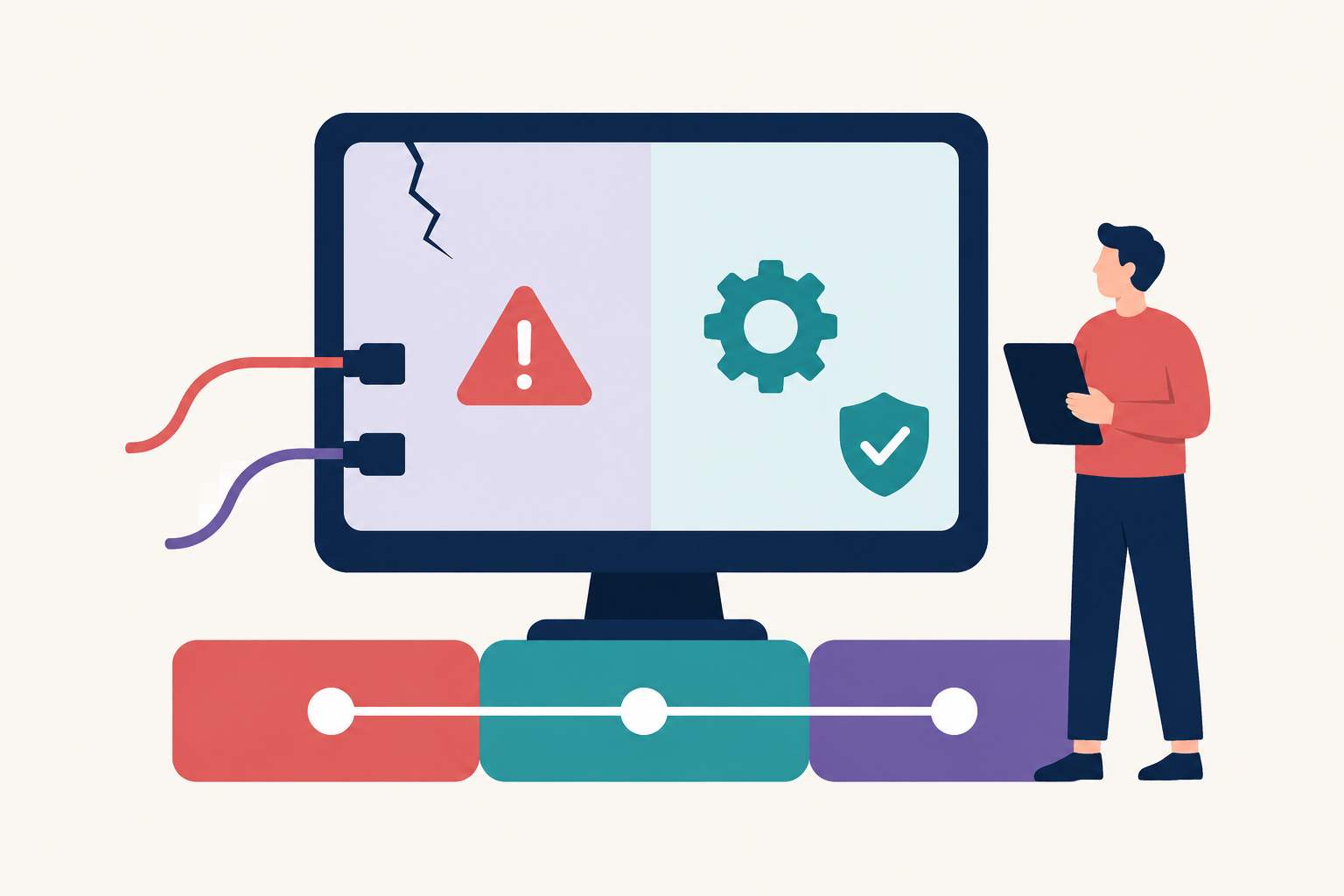
- Situation
A critical application has become difficult to change
Every modification is slow, risky or dependent on knowledge held by a small number of people.
An inherited or legacy application needs a future
The software still matters, but its architecture, technology or maintenance model is no longer sustainable.
You want to add useful AI to an existing application
AI could support document processing, knowledge retrieval, decision-making or complex workflows—but it needs a defined operational purpose.
- Approach
- 01
Recover technical understanding
Trentinian begins by recovering technical understanding.
- 02
Analyse the existing system
AI-assisted analysis can accelerate onboarding by helping identify architecture, major subsystems, dependencies, data flows, security boundaries and areas of technical risk. This includes the application’s data model, database structure, persistence patterns and data flows where these are relevant to stability, maintainability or modernisation.
- 03
Validate the findings
The findings are then validated through engineering analysis, source-code inspection, runtime behaviour, available documentation and discussion with stakeholders.
- 04
Stabilise, then modernise
Trentinian prioritises the work required to stabilise the application and determines where modernisation is economically justified.
- 01
- Outcome
An application that is better understood, more controlled and supported by a practical technical roadmap.
Where agreed, Trentinian can continue as the engineering partner responsible for maintenance, modernisation and continued technical evolution.
SERVICE 04
Business process automation
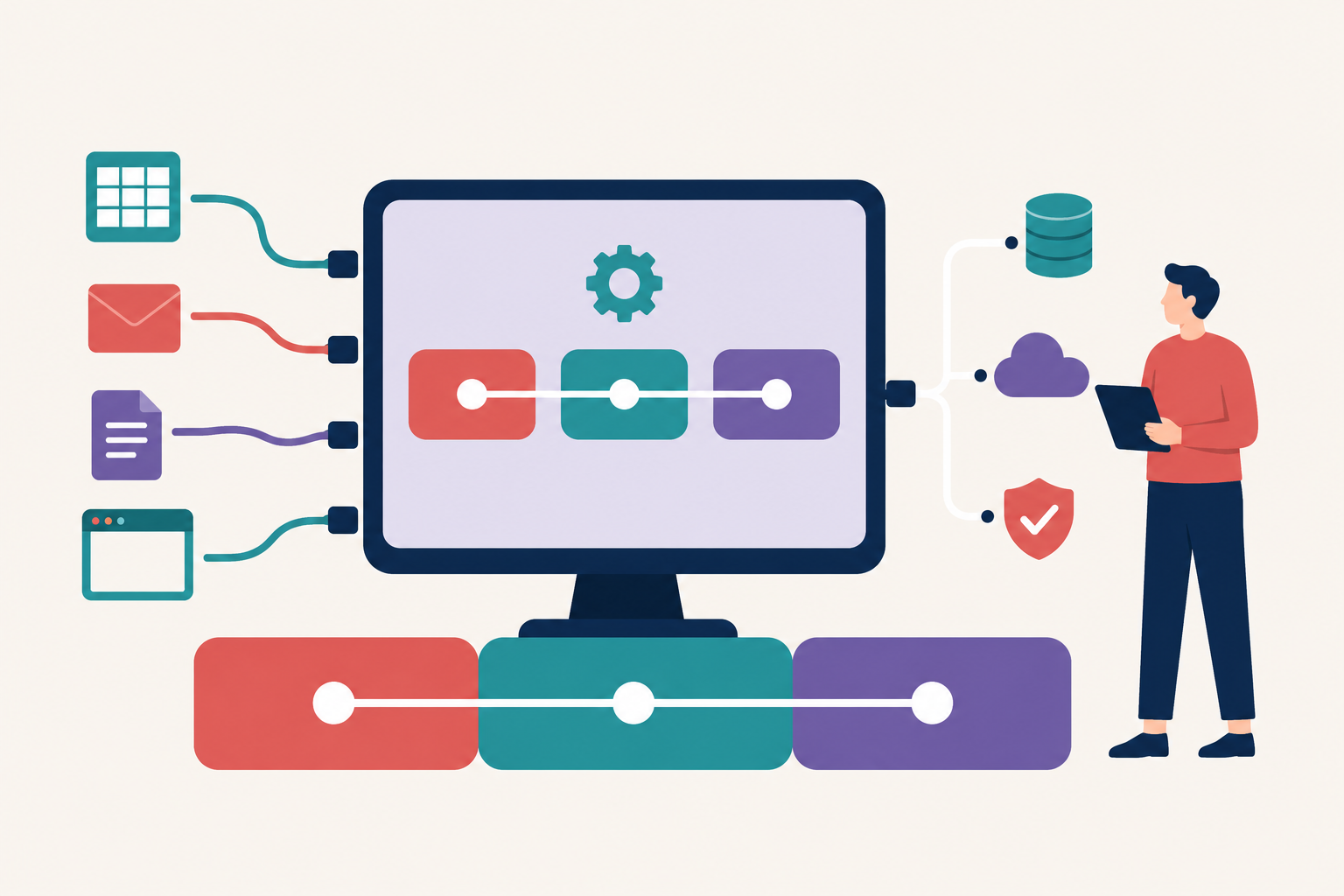
- Situation
A spreadsheet has become a business application
A workbook now contains critical data, business rules and operational processes it was never designed to support.
A recurring process depends on emails and manual follow-up
Requests, approvals and handovers are coordinated through inboxes, reminders and individual vigilance.
Your team repeatedly prepares the same reports or documents
People spend hours gathering information, copying values and rebuilding recurring outputs.
- Approach
- 01
Model the actual workflow
Trentinian models the actual workflow, identifies the parts that benefit from automation and designs a purpose-built application around the business process.
- 02
Build the application
AI-assisted engineering can reduce the effort required to move from process understanding to working software.
- 03
Connect it to the business
Where useful, the resulting application can integrate with existing business systems, identity platforms, APIs, documents, databases and cloud services.
- 01
- Outcome
A maintainable business application that reduces manual work, improves consistency and gives the organisation greater control over a specialised process.
The objective is not automation for its own sake. The application must create enough operational value to justify its continued use and maintenance.
SERVICE 05
Systems integration and API engineering
- Situation
Stop entering the same data twice
Information is manually copied between systems because the applications do not communicate.
A new system must work with the software you already use
A platform, application or service needs to exchange data reliably with your existing environment.
A fragile integration has become business-critical
Scripts, file transfers or improvised connectors now support important operations but are difficult to monitor and maintain.
- Approach
- 01
Map the systems and boundaries
Trentinian identifies the systems involved, the data and processes that cross system boundaries, and the operational and security requirements of the integration. Where integration depends on moving, transforming or reconciling data between systems, Trentinian also addresses data mapping, validation, persistence and integrity as part of the solution.
- 02
Choose the integration pattern
The solution may involve APIs, background processing, event-driven integration, scheduled synchronisation, data transformation or other integration patterns appropriate to the problem.
- 03
Implement and verify
AI-assisted engineering can accelerate analysis of existing interfaces, implementation, mapping, testing and troubleshooting.
- 01
- Outcome
Dependable integrations with clear boundaries, appropriate security, observable behaviour and maintainable implementation.
The objective is to reduce friction between systems without creating another legacy layer that becomes difficult to operate or evolve.
SERVICE 06
Turn business data into working software

- Situation
Your data exists, but people cannot use it effectively
Valuable operational information is trapped in databases, exports or specialist systems.
Teams need one reliable view of the business
Information is scattered across different sources, making it difficult to understand current activity and make decisions.
Customers or partners need direct access to selected data
A secure portal, dashboard or application could replace repeated requests, emailed reports and manual status updates.
- Approach
- 01
Identify the data and the opportunity
Trentinian begins by locating the information that matters, understanding how it is produced, who uses it and what operational or commercial opportunity it could support.
- 02
Consolidate and structure the information
Data is cleaned, validated, enriched and modelled so it can support dependable software behaviour rather than ad-hoc manual interpretation.
- 03
Incorporate it into working software
The structured information is embedded into an application, workflow, portal, API or decision-support system designed around the actual business need.
- 04
Measure and refine the outcome
The solution is evaluated against the agreed operational or commercial objective, then refined as real usage provides better evidence of what works.
- 01
- Outcome
Operational dashboards connected to real workflows.
Customer or partner portals.
Data-backed SaaS products.
Workflow and decision-support applications.
Search and knowledge applications.
Reporting and analysis systems.
Automated ingestion and classification.
APIs that expose approved business data.
Integration and synchronisation between systems.
AI-assisted applications grounded in authorised organisational data.
Start a conversation
Tell us about your project.
Whether you are considering custom software that previously seemed too expensive, taking a prototype toward production, or trying to understand and maintain an existing application, the first step is a short conversation about the problem and whether Trentinian’s engineering model is a good fit.